
hostwright.yaml
The manifest format — the fields shown in the example, what they mean, and what is still under design.
A stack is declared in a single hostwright.yaml file. This page documents the
fields used in the example below. Anything not listed here is still under design
and should not be relied on.
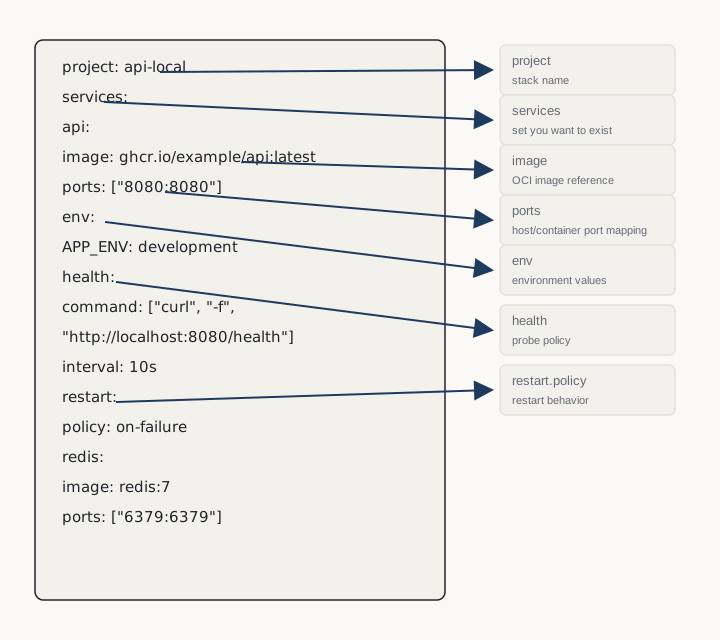
Example
project: api-local

services:
  api:
    image: ghcr.io/example/api:latest
    ports:
      - "8080:8080"
    env:
      APP_ENV: development
    health:
      command: ["curl", "-f", "http://localhost:8080/health"]
      interval: 10s
    restart:
      policy: on-failure

  redis:
    image: redis:7
    ports:
      - "6379:6379"
Fields
| Field | Type | Meaning |
|---|---|---|
project | string | Name of the project. Scopes ownership and the resources in this stack. |
services | map | One entry per service, keyed by service name. |
services.<name>.image | string | The container image reference to run. |
services.<name>.ports | list of strings | Port mappings in "host:container" form. |
services.<name>.env | map | Environment variables passed to the service. |
services.<name>.health.command | list of strings | Command run to check health (argv form). |
services.<name>.health.interval | duration | How often the health command runs, e.g. 10s. |
services.<name>.restart.policy | string | Restart behavior. on-failure is shown above. |
Notes
- Images should provide
linux/arm64. On Apple silicon, an image that only resolves toamd64runs under Rosetta and is allowed only by explicit policy. - Health checks are honest about the runtime: a check can only report what Apple container can observe.
Open questions
- The canonical duration format and which fields accept durations.
- Whether the manifest gains an explicit schema version field before the first release.
- How secret and config references are expressed without ever putting secrets in the file. See the safety model.